‘All the fish were dead in one tank. There were more dead fish in the other tank. But I saw one fish left. It was small and red. It was swimming around. When was it going to die? It could never escape.’
bit.ly/VIRO1
In case you missed them …
‘All the fish were dead in one tank. There were more dead fish in the other tank. But I saw one fish left. It was small and red. It was swimming around. When was it going to die? It could never escape.’
In case you missed them …

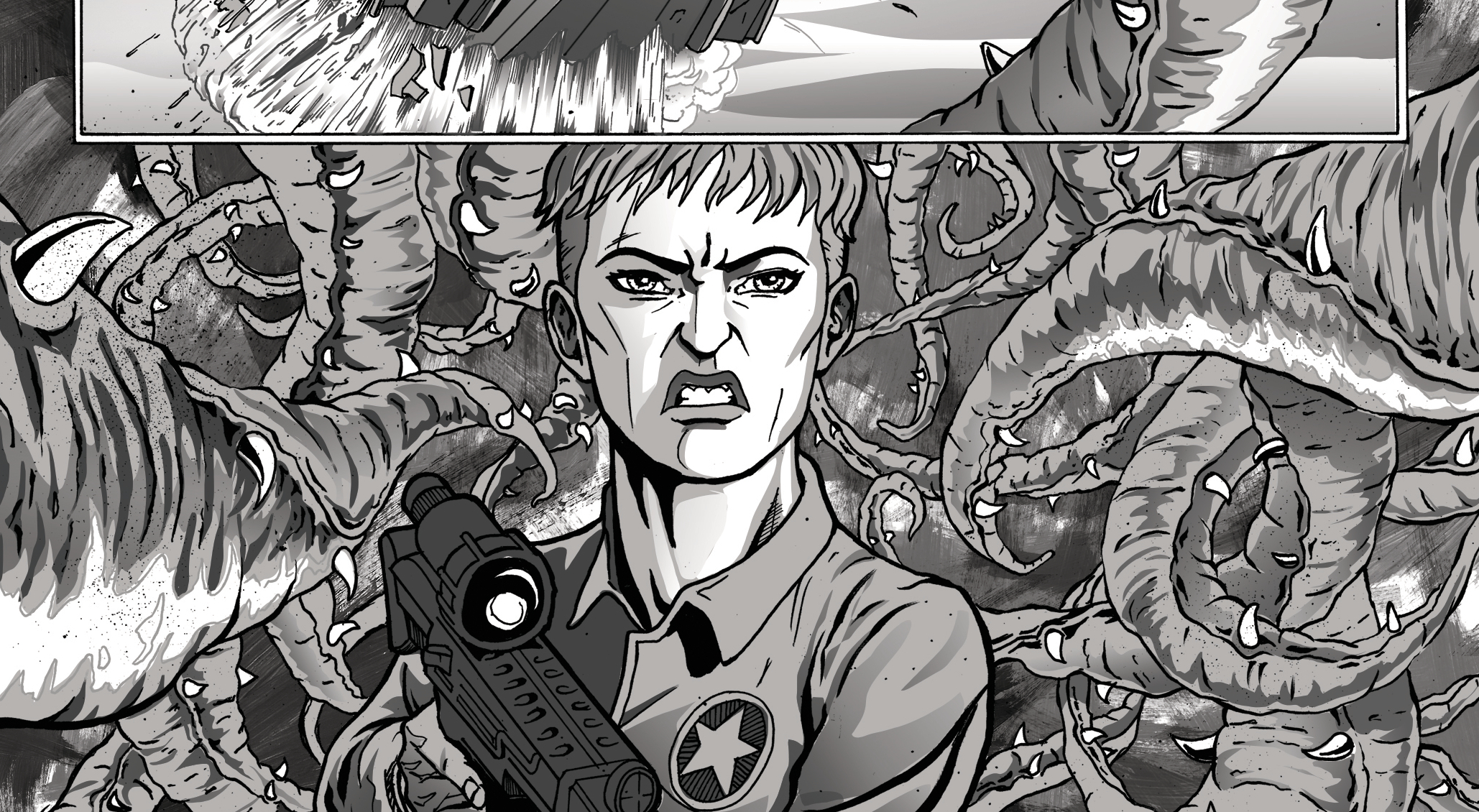
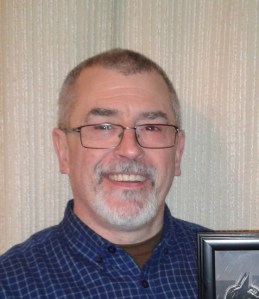 Today’s guest post comes courtesy of Ray Roche from Two Pugs Publishing. You can follow Ray and his comic book adventures on Twitter, Facebook and Instagram. Ray has kindly agreed to give everyone an insight into how he writes. He has also kindly supplied some artwork from his latest publication SOMA: Eden. Fiona Boniwell of Boniwell Graphics supplied the cover. The art is by Michael Arbuthnot.
Ray sells his comics via his Facebook page as well via email at esper211@hotmail.com. The comics are also available to buy at the following shops: Comic Vault in Cork City, Celtic Comics in Portlaoise, and Comicbook Guys in Belfast. Ray has a new comic coming out very soon. Dem Bones is about a pair of Detectives tracking a child abducting serial killer in Dublin, government and religious cover-ups and it’s a comedy.

When someone asks me where I get my ideas I am always flippant. I tell them that when a Mammy-idea and a Daddy-idea love each other, they get married and I just wait until Mammy-idea isn’t looking and steal the baby-idea from under her prodigious rump.
The average person will either say that they couldn’t do what I do, or wow you have some imagination. We all have the ability to lie. Writers have the talent to think up a really, great lie.
Writing comics is different to writing prose, long or short form, but it is still writing. The rules of comics are odd, but they have a cog-meeting-cog feel to them that works. Follow them along the conveyor belt and what comes out of the machine is a story you can show to someone else and they might just like it. We call these people The Readers. They provide the final element in the formula, the thing that makes the alchemy work.

My process for writing is a little different to most others in that I start with an idea. I know, sounds tritely obvious but how many times do we overhear a conversation about a book or a film that goes like this?…
The new Stephen King book/movie? What’s it about?
Well, this killer clown preys on children in a small Maine town…
No, that would be the plot. Not an answer to “what’s it about?”
My process is simple. I look at things around me and make lists. Last year, I wrote my first comic. I made a list of genres that I wanted to write about. Top of that list was “Robot Love”. I made a free association game out of it, writing ideas on post-its, dozens of them. Then I read them again. I was very surprised to see that I had written “Grief” on one of those square yellow traitors. I like to think of my subconscious as a Mad Scientist’s lab, beakers and Bunsen burners and a Tesla machine in the corner making ZZZZZZT-crackle noises. I even imagine there is an electro-pop soundtrack playing as the scientist, who is wearing industrial strength black rubber gloves as he plunges his hand into a cauldron and hurls spaghetti ideas at the wall. He pauses each time and counts to ten. If the spaghetti sticks he scrapes it off and emails it to my conscious where I (like everyone else) check my emails every week or so. I asked myself what grief meant to me and it brought me to my Mother.
Mothers are wonderful things. They try to protect us, stop us falling out the nest, or being taking by baby-idea-stealing passers-by. Sometimes they refuse to accept that their sons need to grow up and make their own mistakes, their own path to whatever conclusion is waiting. I wrote Mother-Son relationship on a new list and made the decision that this story was about my relationship with my Mother.
Now I knew what it was about but what’s next?

I think of this as the tube of paint in the art shop step. I have the idea, but it’s concentrated, almost bitter, now I need to spread it on a canvas so other people can stand back and go “Oh, yeah… I see what he means.” The canvas I chose was a favourite get on a soap box and rant of mine: Manifest Destiny. Do we have the right go anywhere and take what someone else has, just because we can? And. AND, can we really justify it by saying God said it’s ok? We SHOULD take because it’s our duty to do it.
So, I was going to paint this Mother-Son story across a Manifest Destiny as yet blank canvas. I had to decide a few things first.
I made more lists.
When is it set? Where is it set? When and where would be a Mutually Assured Destruction contract. I could set it in war-torn Germany at one of those bendy-metal gate camps or I could Moebius strip time and throw robots at the problem with nothing but the phonebook as a guide. When you make lists, they start to propagate themselves. I couldn’t decide, so… I made a list of my favourite robots.
It was about eliminating choices, seeing what was left. My robot list included the pre-Terminator girl from Metropolis, Captain Kirk’s old girlfriend now a shell of herself from the episode “What are little girls made of…?” and Rachael from Blade Runner. None of them seemed maternal. Even the Stepford Wives (the original) didn’t have that organically grown mother-specific love I was looking for. But, there was one character that did. I had written short stories about this character over 40 years ago and I remembered a novella with a robot’s internal monologue as she watches a team of surgeons operate on her surrogate son, Jon Sorrenson. This was Soma. This was kismet.
I needed to isolate them to forge that mother-child bond in the reader’s mind. I turned to space. Every decision seemed a practical one. The story needed this, therefore that must happen. A ship carrying colonist worked within the manifest destiny theme. Soma and Jon needed roles.

The colonists were going to land on a virgin planet. Their mission came from a deity in the sky – The Ship. The ship’s AI would scan the world before they landed. It knew all. It was God-like. The ship could approach the world but was forever kept from it. It needed an agent, to travel among the people, guiding. Soma was ubiquitous. Being a robot, she would outlast the generations of colonists. I shortened her life with the boy. She became a replacement, stepping (literally in the first panel) into the role of SOMA when her predecessor is destroyed in an accident. On her first tour of the ship she meets a mewling infant, newly born as she, and the bond begins to form. She is his constant companion as he grows into a man. With the limited space in a comic I had to show him age, grow into the position of colony commander. Within a few pages it looks as if he ages from his teens, to a 25 year old, to a 35 year old on the planet, now in command.
The greater story of the ship, Soma, and the events on the planet and afterwards is too big for one comic. I couldn’t tell it all in 24 pages (though, we added 4 pages at a late stage) so what I decided to do was (taking my cue and several billiard balls from George Lucas) jump into a point in the overall arc that had a self-contained mystery and end it after an emotional plunge with another mystery. The story would now run over 4 issues, with past and future events playing out in flashback and parallel narrative.

Everything in a comic has to serve a purpose or it is waste. My process is to write the last page first. That way I know how it ends and events lead up to a natural climax, not a manufactured “to be continued…” I work backwards, sketching out the plot, key points, surprises etc (a surprise in comics has to come on the left page as the reader turns it over). Then I put my characters into the situation, again working backwards. That way, things are foreshadowed. This requires a bit of juggling. Sometimes a character’s reactions do not fit, and the dialogue is switched to another character. Lastly, the dialogue. I read it out loud. If it seems stilted, it probably is. In a key scene on the bridge of the ship I use stilted dialogue to make the reader feel that something is not right here. This scene is an echo backwards and forwards in time. These people were involved in the events before the arrival of the present SOMA and will play a part in events after this episode.
I have a formula: Idea, themes, characters, location, events (plot).
When I have the formula set in my mind (and copious notes, written and on computer on everything from the character’s backstories to the level of tech used in the story) I sit down and write the plot in very simple language. No frills. A, B, C.
I give each scene a funny title. I populate the scene with the characters.
I go back, again and again over several days and fill in details under each scene heading.
I add. I add. I add until I have described everything in the scene, including intent and motive (not the same thing, I find).
I trim away the fat. In comics they say: “Kill your darlings.” Sometimes, the thing the writer is most happy with and just cannot do without is the thing that is slowing the narrative down or making it about something else, not the story.
Eventually, I break each comic page down into panels, with enough description to help, not hinder the artist, but enough to tell the story.
I rewrite, edit, rewrite, rinse, repeat.
When it feels right, I put my head in the lion’s mouth.
I show it to someone else. This is an important step in the process. The final goal is for someone to actually read the comic so it’s important to get another perspective.
Then, it’s sit back and accumulate the abundant accolades.


Hello Everyone
We are playing with words today.
Key words.
We are seeing what they sound like when we say them out loud.
We are putting them in an interesting order to see if this has a positive effect.
We are writing differently.
Using a brand new approach.
Using positive words to test their impact on being read.
Experimenting.
bit.ly/VIRO1
Putting into practice all of the very important reading we have been doing about exciting advances in software technology.
Marketing.
Promotion.
Branding.
All of the exciting opportunities that exist in the story of the 21st Century.
We are seeing what happens if we open our eyes to a new way of looking at things.
It is always good to try new things.
Positive things.
We really hope you are having a fantastic day.

We are sharing our love of information by including links to other new and exciting opportunities.
bit.ly/FalconBoy
We hope you find this new approach interesting.
We really hope to speak to you all soon.
Barnaby

Hi Everyone
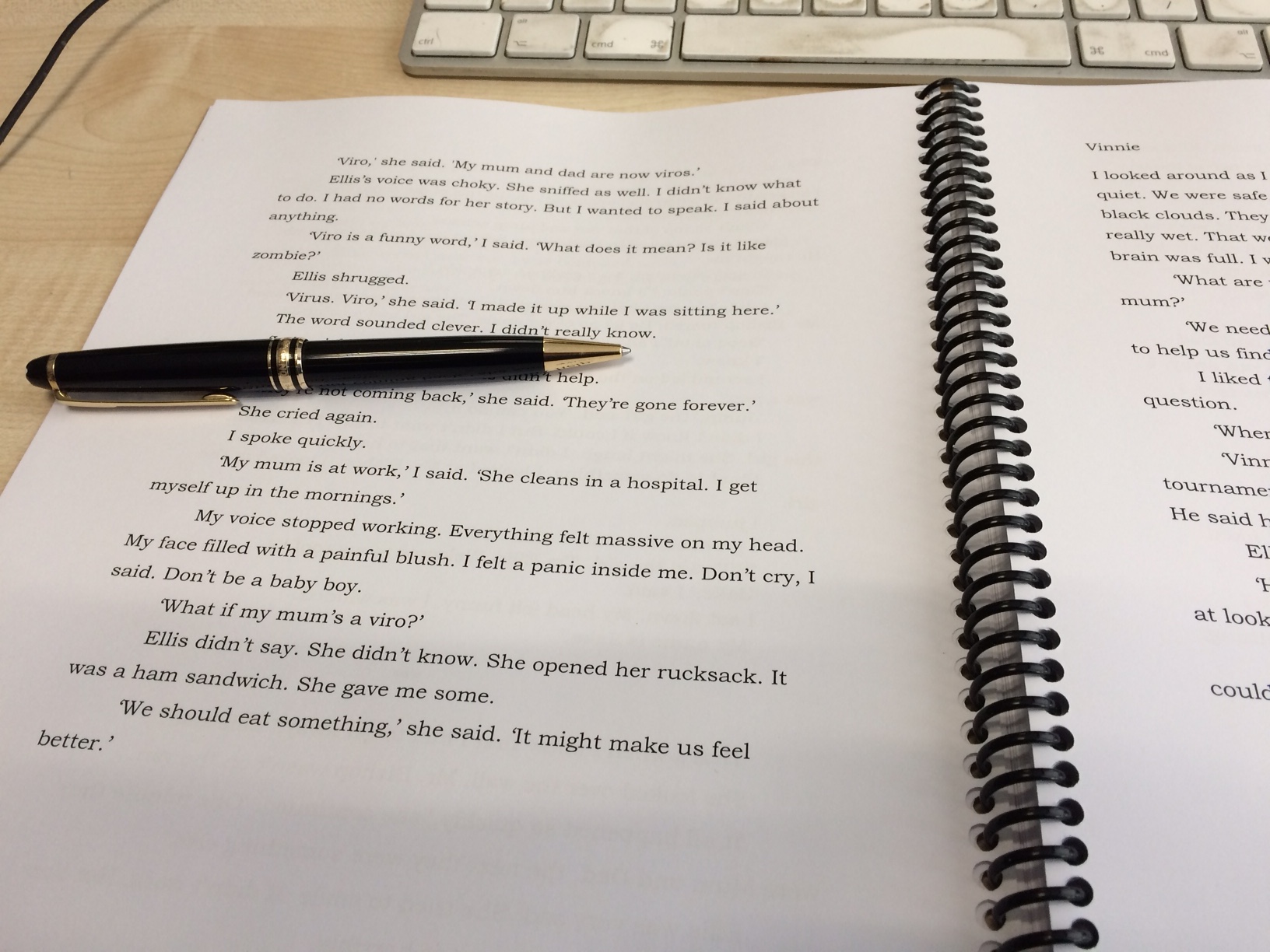
Intoxicated by the fresh scent of newly-printed matter, I have been on a formatting frenzy.
Even as we speak I am taking a break from page breaks and section breaks.
At the moment, the breaks are winning and I have requested that an extra dropdown tab from the menu be made available to me.
Page Break,
Section Break.
Heart Break.
I have learned more about front matter, printers keys, colophons, TOCs and all manner of other typesetting tomfoolery in the last few days than in a lifetime of writing.
It is writing.
The mechanics of the process.
But it is also something else.
It is the clothes we wear.
Our shoes.
The turn of a collar.
The button unbuttoned.
The single-breasted suit.
Have a great week.
Barnaby

Hi Everyone
The snow has arrived.
Thick and heavy.
Pretty.
Pretty irritating.
The sky looks like the blank page at the start of a new novel.
White space.
Does this mean that footprints in the snow are like words?
Tire tracks as paragraphs?
The story of a snow storm typed onto its own downfall?
Stay safe and warm, everyone.

Hi Everyone
It is official.
I am now a publisher.
Well, I have been previously (sort of) but this time I own the unique numeric commercial book identifiers that will allow me to plough my own furrow.
They are mine.
And all the botheration that comes with them.
I felt it was the right thing to do.
The story is a simple one.
Years ago, in a separate but still parallel life, I published an academic book on a short cycle of British films from the 1950s and 1960s. The book was a re-calibration of my doctoral thesis.

The British New Wave has floated through space ever since like some kind of unmanned craft.
It occasionally makes contact with sentient lifeforms, crash-landing now and again on a university reading list.
Or orbiting on the every edges of some form of intellectual discourse.
But it spends most of its time merrily moving closer and closer towards the extreme outer edges of space.
On its way somewhere but never getting anywhere significant.
It never quite resulted in that dream book tour of the US that I imagined.
Nonetheless it is out there in deep space and will always be.
A permanent reminder of something.
Or nothing.
Until very recently.
A strange transmission was beamed back from the furthest reaches of the darkness.
My bank wrote to tell me that a royalty payment had been received from the book’s publishers.
Naturally, after years of radio silence, I was thrilled to hear such a message.
However, I was more thrilled by the happenstantial nature of the payment itself.
The amount I received was very much almost exactly identical to the amount I needed to purchase a swathe of unique numeric commercial book identifiers.
Within ten pounds sterling.
It seemed too good a thing not to use the monies received from one book as seed money for my next set of books.
I like to think that even as I type, The British New Wave has gone back into deep space exploration again.
On a new course bound for anywhere.
Set to make contact once again at some random point in the future intersection of space and time.
But not before I have gotten used to the radio silence.
Again.

Hi Everyone
I’m writing again.
Just a thousand words.
It’s very different.
Far from what I’m used to writing.
Or have ever written before.
But it’s fun.
The thrill of the new.
I have no idea where it will lead.
Even if it leads anywhere.
It doesn’t have to.
I might not let you see it.
I might not let anyone.
At this stage it doesn’t matter.
All that matters is that everything begins again.
Again.

I haven’t written a word for five days now.
Not that I’m counting.
Much.
I normally write 200 words per day.
Or at least try to.
Sometimes less. Sometimes more.
I’m fine with not writing anything.
I learned a long time ago not to be hard on myself when I wasn’t writing.
But I do prefer to be writing all the same.
When this happens to me I imagine that I am in that lovely place between words.
We are all in that place.
Sometimes not for long.
The time it takes to finish a sentence.
Or weld three sentences to form a paragraph.
Eight paragraphs to become a chapter.
Other times the time it takes for the words to begin again.
I have been in that lovely place for five days now.
I am fine with this.
I am simply waiting for that next …

Hi Everyone
In class the other day we were talking about composition and framing in contemporary filmmaking.
The conversation was animated and interesting and we were thinking of examples from films when the position that someone stands in can be read as something much more than the actor simply hitting their mark.
For example, an actor standing alone in the frame can suggest isolation.
A high camera angle and long shot length can heighten this feeling by also emphasizing smallness.
We have all seen moments in films when characters are overwhelmed by the enormity of the events that they find themselves experiencing and this enormity is doubly emphasised by their actual smallness within the frame.
No words are needed.
Single figures in a single frame can also be used to signal dominance.
Actors fill the frame with their body and this filling of the frame can be read in a variety of ways that all place emphasis on the character’s importance to the film.
Again, no words are needed.
When writing I aim to see my story cinematically.
I imagine what the story would look like as a film.
Not because I expect this to actually happen – even though it would be marvelous if it ever did.
I see my writing this way because I find it helps me strip away the language.
It helps me find the least number of words needed for a sentence.
The least number of sentences needed for a paragraph.
You get the idea.
No words are needed.
How do you write?
Speak Soon
Barnaby

 BARNABY TAYLOR