The Eleventh Film – Part III
There once was a looped fragment.
The image of a word.
Now there is only nothing.
And any thoughts that still remain are those she had about the end of all things.
There once was a looped fragment.
The image of a word.
Now there is only nothing.
And any thoughts that still remain are those she had about the end of all things.


Bono was talking on what looked like a Mobira Cityman 900. 183 x 43 x 79 mm. Those things have a total weight of 760g. They were nicknamed ‘Gorba’ in Finland because Mikhail Gorbachev used one during a press conference in 1987.
Who would be on the other end of a phone like that? And what would be said? I could only imagine.

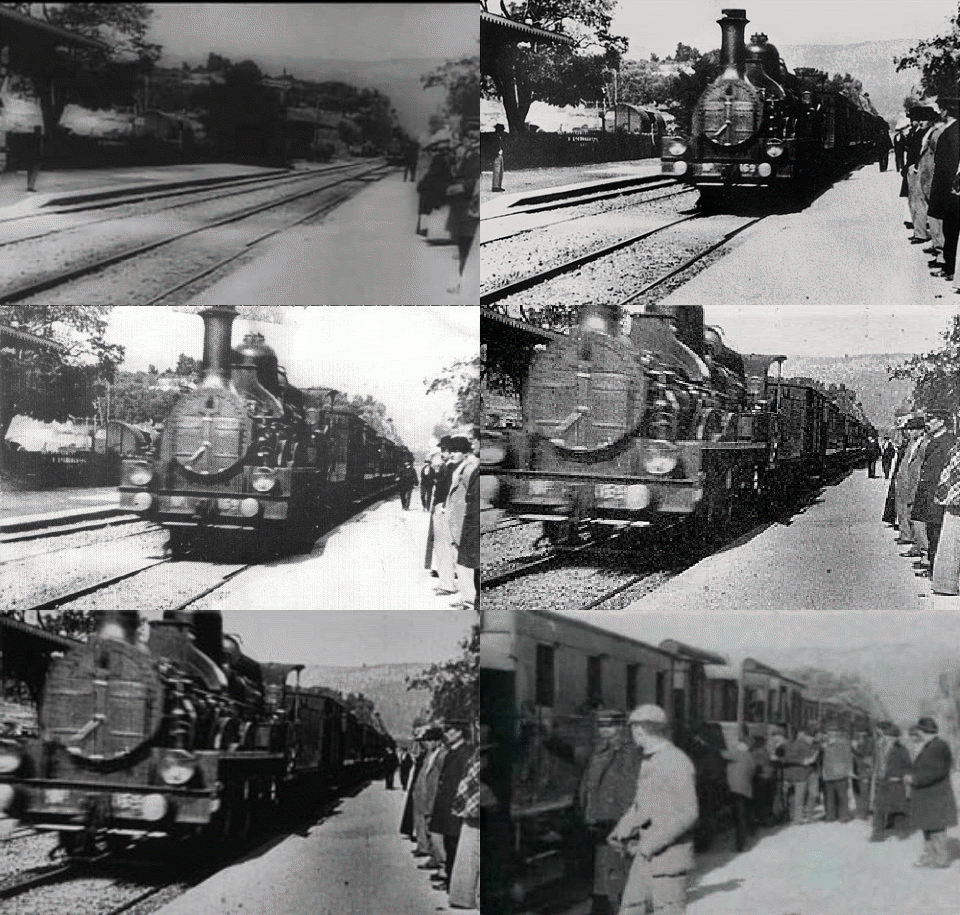
The first public film screening organised by Auguste and Louis Lumière took place on December 28th 1895 at the Salon Indien du Grand Café in Paris. Eleven short films were on the bill that night. Each film was 17 meters long, which, when hand cranked through a projector, ran approximately 50 seconds. Only ten films are listed for posterity.

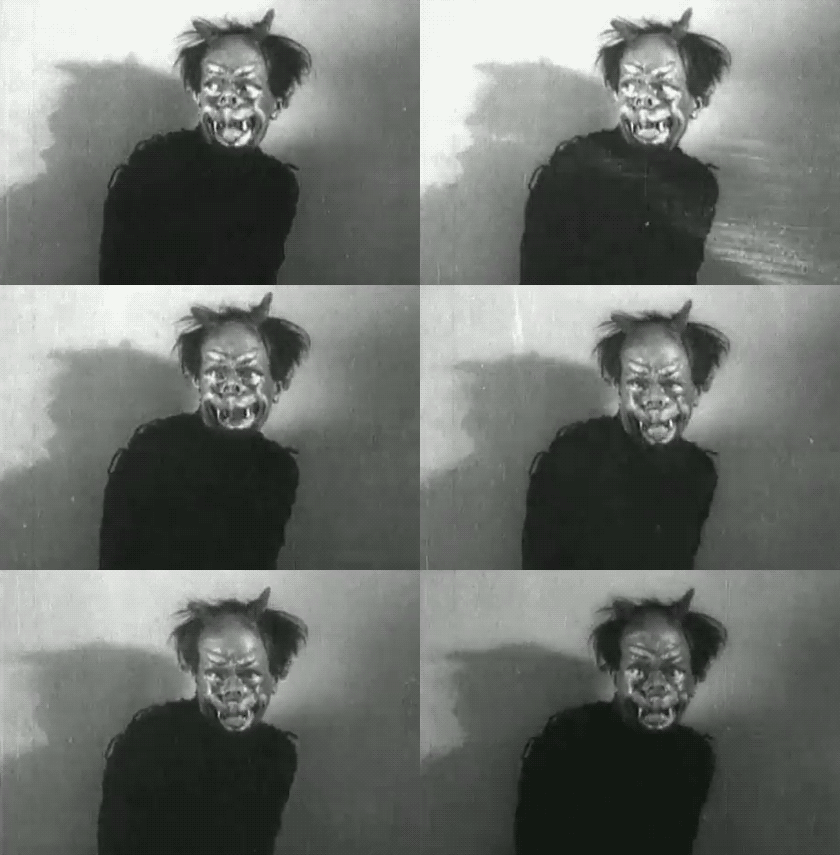
The eleventh film was called The View of Pazuzu returning to the World – a desert scene, with a half-buried broken statue and the wind blowing. It ran for only one second and was not noticed by the audience.


In VIRO II, we pick up with the viros (zombies) who are overrunning the world and the small band of children who are trying to survive in this world. The children’s separation from their parents also serves (as it did in VIRO I) as a powerful dramatic device, providing the next generation with the stage and platform to figure out a way forward. Barnaby really understands the mind set of young children and evocatively and beautifully captures their innocence but also their determination and guts to persevere against the odds and you as the reader wants to be with them every step of the way, willing them forward. Barnaby also excels at capturing the petty jealousies and competitiveness that can pervade the group dynamic of young children but equally the intensity and tenderness of their relationships.
To say that this book is a page turner is an understatement. Barnaby can really write an action packed scene with fear inspiring characters such as the Tall Man. Baxter the dog who accompanies the children gives the story the delightful twist of feeling like an apocalyptic Famous Five. Genius. The story is essentially an allegory set in a far more perilous and shaky world and is therefore not only for children but also for adults. Potent messages are present throughout the book. Jake incisively says ‘The world was wrong now. It was bad and broken. I didn’t understand.’ That a new value system is required to fix today’s broken world is also indicated with even the Reverend stating that ‘in order to believe in the Bible, you have to stop asking so many questions and just accept what you are told. And I have always found that hard to do. The world created in seven days? Immaculate conception?’ By the end of the book it’s apparent that the new value systems lies with the children and their unselfish spirit of caring and cooperation, the perfect building blocks of a new world order which the author may reveal in further detail in future iterations of the book as possibly hinted at by the cliff hanger of the book’s ending.
The book is a must read. Barnaby is an exciting and passionate writer. There’s real depth of meaning behind his books. You emotionally engage with and care about the book’s characters. Barnaby’s books also have a strong visual sensibility. His stories particularly VIRO I and II would translate superbly to television and cinema.


Hi Everyone
VIRO has just received another FIVE STAR review and I thought I would share it with you. The review is from fourteen year-old JP and really captures what I was trying to achieve with the book. I am delighted that the book is reaching people and making them respond so positively.

Following a texting accident, the World summons Jodocus Meaddowcraft, a constipated alien from another dimension. Jodocus sets about punishing the World for summoning him.

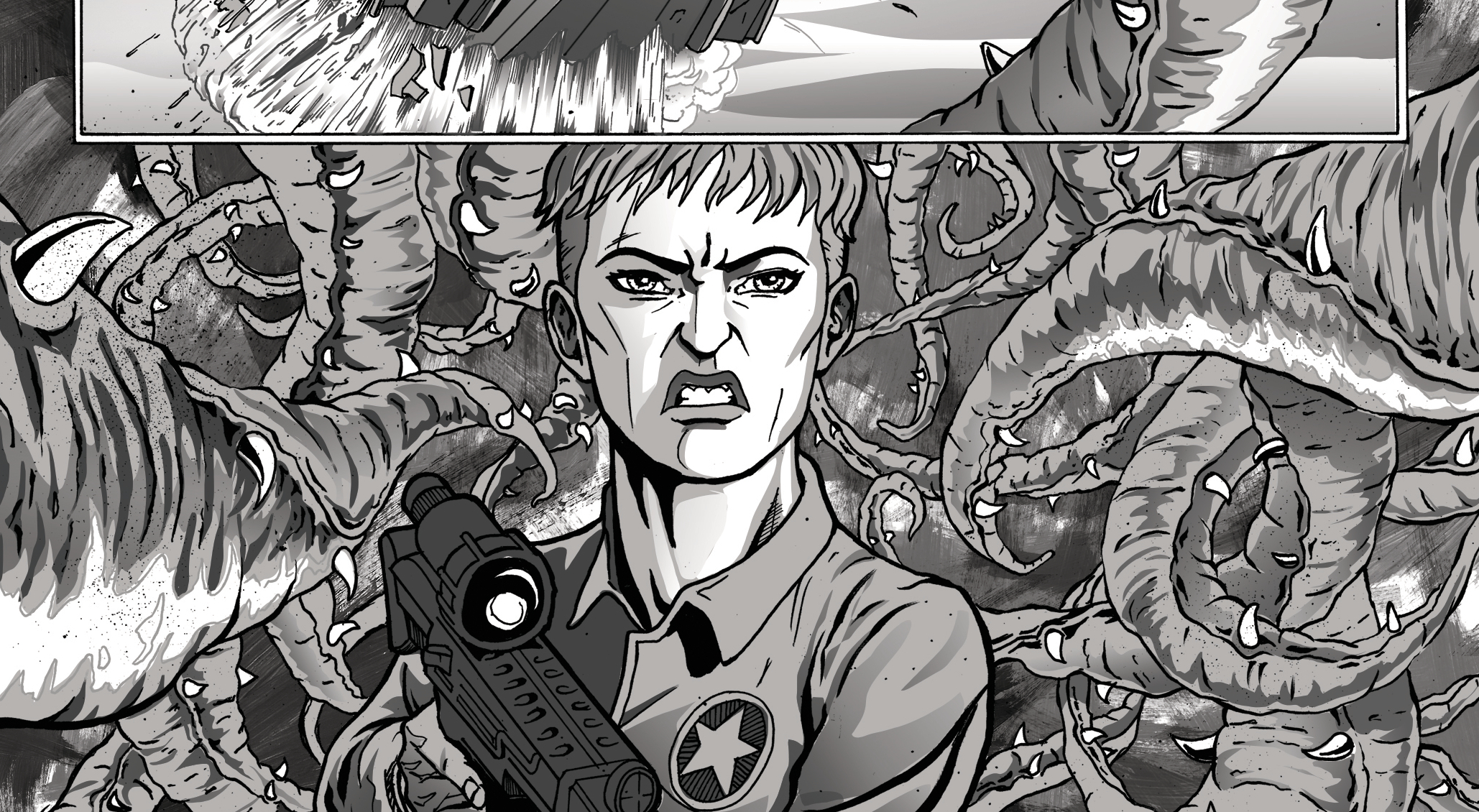
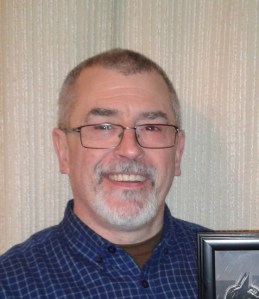 Today’s guest post comes courtesy of Ray Roche from Two Pugs Publishing. You can follow Ray and his comic book adventures on Twitter, Facebook and Instagram. Ray has kindly agreed to give everyone an insight into how he writes. He has also kindly supplied some artwork from his latest publication SOMA: Eden. Fiona Boniwell of Boniwell Graphics supplied the cover. The art is by Michael Arbuthnot.
Ray sells his comics via his Facebook page as well via email at esper211@hotmail.com. The comics are also available to buy at the following shops: Comic Vault in Cork City, Celtic Comics in Portlaoise, and Comicbook Guys in Belfast. Ray has a new comic coming out very soon. Dem Bones is about a pair of Detectives tracking a child abducting serial killer in Dublin, government and religious cover-ups and it’s a comedy.

When someone asks me where I get my ideas I am always flippant. I tell them that when a Mammy-idea and a Daddy-idea love each other, they get married and I just wait until Mammy-idea isn’t looking and steal the baby-idea from under her prodigious rump.
The average person will either say that they couldn’t do what I do, or wow you have some imagination. We all have the ability to lie. Writers have the talent to think up a really, great lie.
Writing comics is different to writing prose, long or short form, but it is still writing. The rules of comics are odd, but they have a cog-meeting-cog feel to them that works. Follow them along the conveyor belt and what comes out of the machine is a story you can show to someone else and they might just like it. We call these people The Readers. They provide the final element in the formula, the thing that makes the alchemy work.

My process for writing is a little different to most others in that I start with an idea. I know, sounds tritely obvious but how many times do we overhear a conversation about a book or a film that goes like this?…
The new Stephen King book/movie? What’s it about?
Well, this killer clown preys on children in a small Maine town…
No, that would be the plot. Not an answer to “what’s it about?”
My process is simple. I look at things around me and make lists. Last year, I wrote my first comic. I made a list of genres that I wanted to write about. Top of that list was “Robot Love”. I made a free association game out of it, writing ideas on post-its, dozens of them. Then I read them again. I was very surprised to see that I had written “Grief” on one of those square yellow traitors. I like to think of my subconscious as a Mad Scientist’s lab, beakers and Bunsen burners and a Tesla machine in the corner making ZZZZZZT-crackle noises. I even imagine there is an electro-pop soundtrack playing as the scientist, who is wearing industrial strength black rubber gloves as he plunges his hand into a cauldron and hurls spaghetti ideas at the wall. He pauses each time and counts to ten. If the spaghetti sticks he scrapes it off and emails it to my conscious where I (like everyone else) check my emails every week or so. I asked myself what grief meant to me and it brought me to my Mother.
Mothers are wonderful things. They try to protect us, stop us falling out the nest, or being taking by baby-idea-stealing passers-by. Sometimes they refuse to accept that their sons need to grow up and make their own mistakes, their own path to whatever conclusion is waiting. I wrote Mother-Son relationship on a new list and made the decision that this story was about my relationship with my Mother.
Now I knew what it was about but what’s next?

I think of this as the tube of paint in the art shop step. I have the idea, but it’s concentrated, almost bitter, now I need to spread it on a canvas so other people can stand back and go “Oh, yeah… I see what he means.” The canvas I chose was a favourite get on a soap box and rant of mine: Manifest Destiny. Do we have the right go anywhere and take what someone else has, just because we can? And. AND, can we really justify it by saying God said it’s ok? We SHOULD take because it’s our duty to do it.
So, I was going to paint this Mother-Son story across a Manifest Destiny as yet blank canvas. I had to decide a few things first.
I made more lists.
When is it set? Where is it set? When and where would be a Mutually Assured Destruction contract. I could set it in war-torn Germany at one of those bendy-metal gate camps or I could Moebius strip time and throw robots at the problem with nothing but the phonebook as a guide. When you make lists, they start to propagate themselves. I couldn’t decide, so… I made a list of my favourite robots.
It was about eliminating choices, seeing what was left. My robot list included the pre-Terminator girl from Metropolis, Captain Kirk’s old girlfriend now a shell of herself from the episode “What are little girls made of…?” and Rachael from Blade Runner. None of them seemed maternal. Even the Stepford Wives (the original) didn’t have that organically grown mother-specific love I was looking for. But, there was one character that did. I had written short stories about this character over 40 years ago and I remembered a novella with a robot’s internal monologue as she watches a team of surgeons operate on her surrogate son, Jon Sorrenson. This was Soma. This was kismet.
I needed to isolate them to forge that mother-child bond in the reader’s mind. I turned to space. Every decision seemed a practical one. The story needed this, therefore that must happen. A ship carrying colonist worked within the manifest destiny theme. Soma and Jon needed roles.

The colonists were going to land on a virgin planet. Their mission came from a deity in the sky – The Ship. The ship’s AI would scan the world before they landed. It knew all. It was God-like. The ship could approach the world but was forever kept from it. It needed an agent, to travel among the people, guiding. Soma was ubiquitous. Being a robot, she would outlast the generations of colonists. I shortened her life with the boy. She became a replacement, stepping (literally in the first panel) into the role of SOMA when her predecessor is destroyed in an accident. On her first tour of the ship she meets a mewling infant, newly born as she, and the bond begins to form. She is his constant companion as he grows into a man. With the limited space in a comic I had to show him age, grow into the position of colony commander. Within a few pages it looks as if he ages from his teens, to a 25 year old, to a 35 year old on the planet, now in command.
The greater story of the ship, Soma, and the events on the planet and afterwards is too big for one comic. I couldn’t tell it all in 24 pages (though, we added 4 pages at a late stage) so what I decided to do was (taking my cue and several billiard balls from George Lucas) jump into a point in the overall arc that had a self-contained mystery and end it after an emotional plunge with another mystery. The story would now run over 4 issues, with past and future events playing out in flashback and parallel narrative.

Everything in a comic has to serve a purpose or it is waste. My process is to write the last page first. That way I know how it ends and events lead up to a natural climax, not a manufactured “to be continued…” I work backwards, sketching out the plot, key points, surprises etc (a surprise in comics has to come on the left page as the reader turns it over). Then I put my characters into the situation, again working backwards. That way, things are foreshadowed. This requires a bit of juggling. Sometimes a character’s reactions do not fit, and the dialogue is switched to another character. Lastly, the dialogue. I read it out loud. If it seems stilted, it probably is. In a key scene on the bridge of the ship I use stilted dialogue to make the reader feel that something is not right here. This scene is an echo backwards and forwards in time. These people were involved in the events before the arrival of the present SOMA and will play a part in events after this episode.
I have a formula: Idea, themes, characters, location, events (plot).
When I have the formula set in my mind (and copious notes, written and on computer on everything from the character’s backstories to the level of tech used in the story) I sit down and write the plot in very simple language. No frills. A, B, C.
I give each scene a funny title. I populate the scene with the characters.
I go back, again and again over several days and fill in details under each scene heading.
I add. I add. I add until I have described everything in the scene, including intent and motive (not the same thing, I find).
I trim away the fat. In comics they say: “Kill your darlings.” Sometimes, the thing the writer is most happy with and just cannot do without is the thing that is slowing the narrative down or making it about something else, not the story.
Eventually, I break each comic page down into panels, with enough description to help, not hinder the artist, but enough to tell the story.
I rewrite, edit, rewrite, rinse, repeat.
When it feels right, I put my head in the lion’s mouth.
I show it to someone else. This is an important step in the process. The final goal is for someone to actually read the comic so it’s important to get another perspective.
Then, it’s sit back and accumulate the abundant accolades.

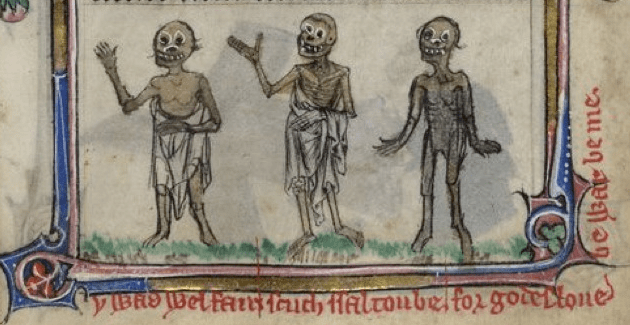
©Barnaby Taylor 2016
1. It is the global television coverage of the 2016 Rio Olympics that brings about the end of the world. No virus. Outbreak. Meteor hurtling earthward. Planet warming. Planet cooling. Rising tides. Tidal waves. Instead, viewers around the globe are endlessly encouraged to email and text and tweet and share their views on the Games and the athletes and the achievements and as always happens with the excitement of live television too many people get too much wrong too many times simultaneously and so they mistype and misspell and send messages that don’t arrive and texts that aren’t delivered and tweets that are returned and shares that never are but instead of these messages and texts and tweets and shares just disappearing they all align instead into one single endless string and spell out in their global accident the Entry Word.
And that is that.
2. ‘We are here,’ says Jodocus Meaddowcraft. Not tall or small or large. Just him. Her. Both. Neither. All. Bleary-eyed. Centuries-old and the same tired. Crumpled after arriving. Constipated. Wearing a plain linen suit with a sweat ring beneath each arm. Polyester shirt. Slip-on shoes. Migraine.
‘I suppose you could call us cosmic spam if you felt so inclined but it matters not a jot. Most things matter the small sameness to us. We are endlessly without endless priorities.’
Jodocus does the chat-show circuit all at once, simultaneously appearing on every chair and sofa around the world. Beamed live on every screen.
‘It was you who spelt the Entry Word so don’t blame us for what happens next. With your too-big fingers and too-hasty thumbs all tapping and typing in terrible error. How could you have ever known?’
Jodocus has very big hands in proportion to the rest of his body when he lifts a single finger for emphasis.
‘History is jumble anyway so what’s more confusion.’
Jodocus smiles for the cameras.
‘Only disorder is truly understood and therefore ever-engendered. None look like you have the capacity for real stillness with your fussing and itching and barking like annoying small dogs all less important than they believe.’
Jodocus shakes his head.
‘No interruptions. None. Simple listening will always suffice.’
And though the whole world has a hundred thousand million objections all based on size and creed and history and logic and faith and superstition and other such informations none of these hundred thousand million objections actually formulate properly in the presence of someone so far removed from understanding as to render each and every thought and belief and hope held dear now redundant. Replaced. Deep dark dense dangerous delicate. Unfathomable.
Wonder.
3. Sea levels start to rise. Waves lap. Buildings now bob. Submerged where once they stood tall and proud. Clouds boil black and fearful. Deserts grow tall green grass springing from the dirty sand.
‘Simple tricks,’ says Jodocus Meaddowcraft. ‘Pointless entertainments designed not to prove worth but to simply demonstrate. D-E-M-O-N-STRATE.’
Mere feints and darts. Patients are miraculously healed and tumours disappear. But churches collapse. Ocean liners sink without trace. Airplanes vanish. Technologies begin their fail. Countries start to starve.
‘This is what I mean by disorder,’ smirks Jodocus Meaddowcraft. ‘In the time we have already spent together I have brought seventy six species of plants and animals back from extinction whilst also removing 0.000002% of the world’s population.’
Jodocus Meaddowcraft looks through the camera into the eyes of the world.
‘The question is what next?’
4. ‘I don’t know what I want with you yet,’ says Jodocus Meaddowcraft to the General Assembly of the United Nations. ‘You brought me here and I haven’t had time to formulate a plan.’
All languages at once are heard true in his ear. Only the world cannot hear each other.
‘You gathered people are right to be afraid because it was a terrible idea to wake me up and get me here from there. A terrible idea.’
The Assembly have no words.
‘I will take petitions like a king from old. You may visit me in my court. I will accept tributes of all and every kind. I will read four letters a day but only if they are handwritten. Be there in person and be prepared to wait for a long time.’
Jodocus Meaddowcraft turns to leave.
‘I warn you though,’ he says over his shoulder. ‘I cannot ever be fair.’
5. ‘I bet you don’t even know what I am?’ Jodocus Meaddowcraft continues. ‘Saint? Resurrect? Alien? Visitor? Deity? Destroyer? Saviour? Traveller?’
No one knows what to say to Jodocus Meaddowcraft. Advice is sought but not provided.
‘No whispering,’ whispers Jodocus Meaddowcraft loudly as delegates confer. ‘Do not talk amongst yourselves any longer. Only to me with the conditions I have outlined.’
Jodocus Meaddowcraft looks around.
‘This building is about to be off-limits to you all so please get ready to leave straightaway.’
6. There is a multitude of us,’ says Jodocus Meaddowcraft. ‘One after the other and then the next again forever now. More than you can count.’
‘Behold the Unslept’ says Jodocus Meaddowcraft, pointing at the screen.
‘See how they play.’ Jodocus laughs. ‘Each one summoned by a mistyped search.’
The Assembly looks and what it sees chilled to the bone. A hundred thousand million figures in perpetual tortured motion; fighting and climbing and dancing and jumping, in gangs and alone, all moving forever. The image is grainy but there was no doubt as to what the world is seeing, the end of itself. They begin materializing. All the shapes and sizes you can imagine. Many you cannot hope to.
7. The next morning. ‘I am obtuse from now forever,’ declares Jodocus Meaddowcraft. ‘We have seen enough of your foolish world to be anything other than annoyed for having been summoned through your stupidity.’
Jodocus smiles.
‘Furthermore, you will now find it hard to understand me when I speak.’
Another smile.
‘But just before that happens just always know that I only have your worst interests at heart. There can never be doubt with this.’
Jodocus Meaddowcraft clicks his fingers.
‘Sense now over gone forever hard speaking me confusion reigns misunderstanding.’
8. ‘Here Bartholomaus Hamson introducing,’ says Jodocus Meaddowcraft. ‘Lieutenant. Sidekick. Limb.’
Bartholomaus Hamson is an ugly brute of a man-monstrosity.
‘Herds Bartholomaus Hamson the Unslept,’ continues Jodocus Meaddowcraft. ‘Guidance divining crowd control.’
Bartholomaus Hamson offers his sleaziest of smiles.
‘Grin on, fine friend,’ says Jodocus Meaddowcraft. ‘Planet now feeling fear and not happiness.’
Bartholomaus Hamson begins to shuffle inconveniently and though the world could never know this is Bartholomaus Hamson expressing his joy at arriving through spontaneous dance. His dermatitis skin forms new flabs and folds and flakes as Bartholomaus gathers an unseemly pace.
9. Another monster appears. Bulbous. Slime-lined. Mollusc.
‘Einav Dionisii,’ waves Jodocus Meaddowcraft. ‘Wrong all do. Evil only evil only ever.’
Einav clears his throat and begins to speak like the discord of a rusty orchestra.
‘More more agathokakological, gathered ones. A-G-A-T-H-O-K-A-K-O-L-O-G-I-C-A-L. Mainly leaning one way and then other but balanced overall.’
Jodocus Meaddowcraft begs to differ. ‘Balance not. Balance not.’
When Einav Dionisii smiles the world feels a bit more glum.
‘Disagreatum est, felice! Disagreatum.’
Jodocus Meaddowcraft doesn’t approve of disagreement and demonstrates his disapproval by deigning to smile.
‘Not cross me, Bulbo! Not no never now!’
10. With a stench from beyond space and time Mally Jaqueminet appears. She is wreathed in rotting weeds.
‘Nihil her thing best,’ says Jodocus Meaddowcraft. ‘See shining eye danger her facing you. Malingering. Moody. Malevolent. Malicious. Magnificent. Murderous. Mean. Malodorous.’
Mally bows lows to the watching world. Jodocus Meaddowcraft continues.
‘Calamitous. Deadly. Dire. Noxious. Pernicious. Ruinous. Sinister. Threatening. Venomous. Vindictive. Woeful.’
Thesauritical in his approach, Jodocus Meaddowcraft delights in introducing the world to his world.
11. Agatho Wagner is a proud-strutting myriapod full of mathematical magnificence expressed physically as troubling angles and lines. Resplendent. Repugnatorial. Agatho takes the utmost pleasure in obnoxion and fully appreciates the disgust by which he is defined across the planes. Agatho does not ever speak but writes instead long missives in a tiny hand with a fine-feathered quill and leaves them on the floor for you to try and avoid reading. Don’t ever read them on pain of death.
12. Husniya Hindge is twin and has an arm as long as a leg and a leg as long as an arm and no-one can be truly sure of her outlines as Husniya Hindge shimmers psychosuggestively to cause a distinct mental uncertainty among all of those unlucky enough to meet her. Imagine being defined by a vagueness. Then imagine that vagueness being further defined by yet more vagary and bewilderness. Husniya Hindge is also exceedingly open-minded and this only adds to the difficulties she presents to any dimension upon which she materializes.
13. ‘Backwards,’ declares Jodocus Meaddowcraft. ‘Backwards now world-spinning. All progress halt. New histories writing.’
His voice is a terrible one, all wrath and gritty.
‘Not resting us ‘til world back beginning spin at start once more.’
Bartholomaus Hamson, Einav Dionisii, Mally Jaqueminet, Agatho Wagner, and Husniya Hindge agree.
‘My plan,’ crows Jodocus Meaddowcraft to the weary Assembly. ‘My heart-hope all ambition decided.’
Jodocus Meaddowcraft raises himself to a height hitherto not imagined and looms large across the floor of the UN Building.
‘My palace now begone foul fellows flee!!!!’
The delegates scattered with a mixture of fear for the future and relief from the experience.
END OF BOOK ONE


 BARNABY TAYLOR